Industrial Accelerator Act promises speed, delivers loopholes
Recycling Europe welcomes the ambition behind the European Commission’s Industrial Accelerator Act (IAA) to stimulate demand for low-carbon products through the creation of lead markets. However, the proposal fails to recognise one of Europe’s most effective industrial decarbonisation tools: the recycling industry.
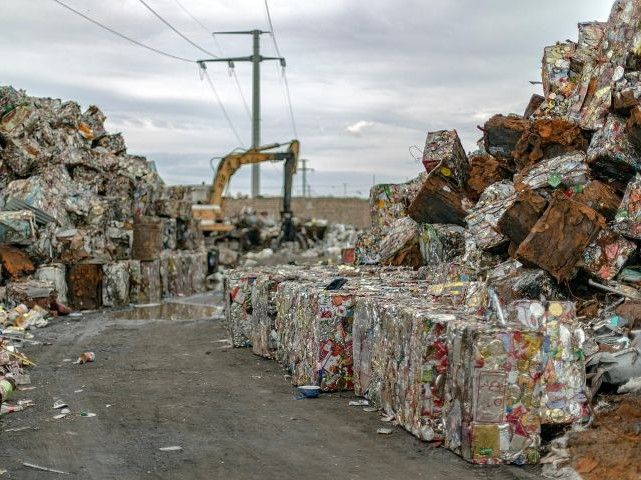
Recycling delivers immediate and large-scale CO₂ savings while reducing Europe’s dependence on third-country raw materials supplies. Yet the IAA does not include recycling as a strategic industrial sector and thus, fails to provide fast-track permitting for recycling projects. Without accelerated deployment of recycling infrastructure, the promise of “industrial acceleration” risks remaining largely theoretical.
This omission is particularly striking given the EU’s own policy commitments. The Circular Material Use Rate (CMUR) target set in the Clean Industrial Deal aims for 24% circular materials in the EU economy by 2030. While achieving this objective requires a rapid expansion of recycling capacity, the current proposal instead prioritises selected sectors while overlooking the industrial backbone that supplies them with low-carbon recycled materials.
The Act does recognise the importance of stimulating demand for low-carbon products, including through public procurement and sustainability criteria. However, major gaps remain. The proposal barely addresses the role of recycled plastics in industrial decarbonisation and largely postpones circular economy measures to the forthcoming Circular Economy Act. The introduction of “Made in Europe” criteria is a positive step to strengthen Europe’s industrial base. If combined with strong incentives for the uptake of recycled materials in products, it could become a powerful lever to reinforce Europe’s industrial resilience. However, its effectiveness will depend on robust safeguards, particularly as Free Trade Agreement (FTA) partners may qualify as EU origin under the final IAA text, potentially weakening the intended impact.
For sectors such as steel, the credibility of EU decarbonisation policy will depend on how “low-carbon steel” is defined. Any definition must reward circularity and the use of recycled metals. Recycling Europe therefore welcomes the removal of the proposed sliding-scale approach, which would have cancelled the undeniable environmental and climate benefits of recycled content.
Looking ahead, Recycling Europe will closely monitor the standardisation work and delegated acts on steel under the Ecodesign for Sustainable Products Regulation (ESPR) and will continue advocating for a green steel label that fully integrates circularity.
“Industrial decarbonisation cannot be accelerated without accelerating recycling. The EU must align its industrial, climate and circular economy policies and ensure the full value chain, including recycling, is recognised as strategic,” said Maria Vera Duran, Recycling Europe’s Policy Director.

NEWS