Metfer: the new Panizzolo plant for efficient metal recycling
Every processing plant is built to address a specific need, but the real challenge is designing it so that it can evolve over time.
This requirement is particularly evident in the metal scrap recycling sector, where materials, markets and technologies change rapidly, making adaptability essential to maintaining competitiveness.
Within this context, the new plant developed by Panizzolo Recycling Systems for Metfer S.r.l. takes shape. The project was designed to combine high operational performance with advanced process management, making metal treatment more efficient and measurable.
Shared growth
Founded in 1992 by Michele Montrone, continuing the activity started by his father in 1973, Metfer is a long-established Italian company specialising in the processing, transport and trading of mixed metals and electric motors. Today the company is part of a group with several operational sites in Friuli Venezia Giulia and a consolidated presence in both the Italian and international markets.
The collaboration with Panizzolo did not begin recently: Metfer was already equipped with a plant featuring a Flex 1000 Mobile hammer mill, a solution that made a tangible contribution to the company’s development. As production requirements evolved, the need for a further step forward became clear. This led to the decision to once again rely on Panizzolo to develop a new plant project designed to support future growth and further improve operational performance.
Process control as a value driver
The new plant was developed with a dual objective: increasing productivity and introducing a structured system for monitoring recovery rates, capable of providing continuous and objective data on the entire process.
In the treatment of mixed metals and electric motors, plant profitability does not depend solely on the quantity of processed material, but on the ability to maximise the value extracted from each batch. Without precise monitoring of operating parameters and recovery rates, it becomes difficult to accurately assess process efficiency and the real return on investment. As Diego Montrone, co-owner of Metfer, points out:
“Growth today is closely linked to understanding and controlling the process. Only in this way can we identify where value is generated and how we can make processing more efficient and profitable.”
Grinding makes the difference
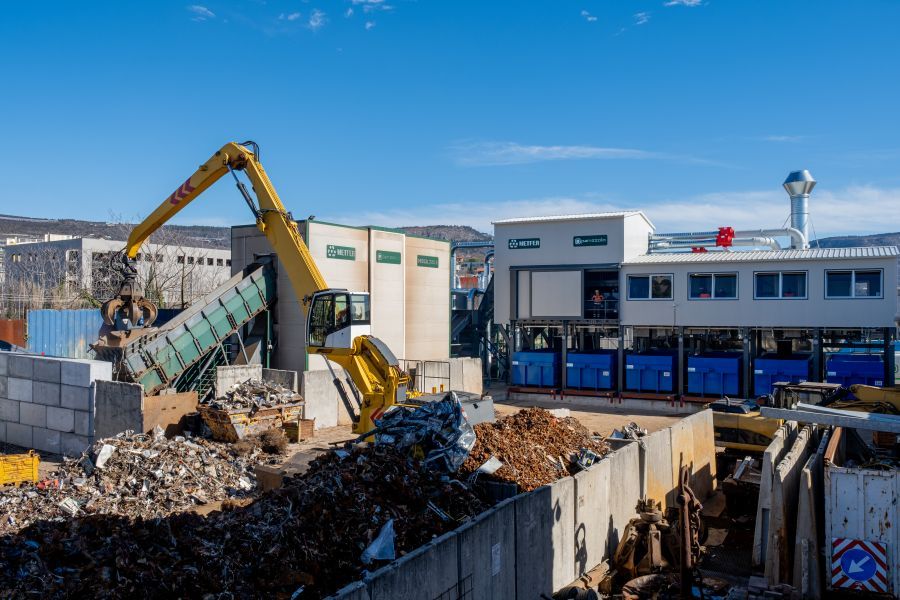
At the core of the new plant is the Mega hammer mill, selected for its high performance and for the strategic role grinding plays within the treatment cycle. Often considered an intermediate stage, grinding actually determines the quality of the entire process.
In this perspective, the Mega mill enables more consistent and reliable processing of mixed metals, adapting to different materials and operational flows. The plant also includes a selection and separation area, designed to maximise performance and already prepared for the integration of future technological upgrades.
Prisma: the real upgrade
The real shift in process management comes from Prisma, the software developed in-house by Panizzolo to provide a centralised and immediate view of the entire treatment process. Its operational logic stems from Panizzolo’s direct experience in managing recycling plants, where continuous analysis of process data has long been a key tool for optimising quality, performance and productivity.
This consolidated know-how has been translated into a structured solution, with the Metfer project providing the ideal context for its industrial-scale implementation.
At the core of the system is advanced batch management, which allows each processing batch to be tracked throughout the entire production cycle while recording operational parameters, recovery rates and energy consumption. Through continuous monitoring, Prisma enables full control of production, reducing verification times and improving the ability to respond to anomalies or inefficiencies.
All data is automatically collected and stored, from electrical consumption of control panels to material flows and alarm events, enabling retrospective analyses and objective comparisons over time.
As Francesco Ruggiero, Head of Automation Design at Panizzolo, explains:
“Technical data becomes a practical tool for controlling production, quality and profitability, allowing process efficiency and return on investment to be measured accurately.”
In this way, Prisma helps the company objectively evaluate the economic sustainability of different processing operations, shifting from a management approach mainly based on experience to a model where operational and strategic decisions are supported by objective data.
Technology looking ahead
The plant developed for Metfer demonstrates how plant engineering today must go beyond immediate operational needs. Panizzolo’s approach is based on the awareness that every plant operates in a dynamic environment where markets, regulations and materials evolve rapidly. In this context, supporting customers means providing not only technology but also experience, vision and tools capable of guiding informed decisions throughout the entire life cycle of the plant.
As Mauro Panizzolo, Owner and Sales Manager, emphasises:
“Designing a plant means thinking not only about how it must perform today, but above all about how it will evolve over time. Our goal is to support customers along their growth journey, helping them build solutions that maintain their value in the long term.”
Towards IFAT 2026: Panizzolo innovation in the spotlight
Looking at plant evolution also means constantly pushing the boundaries of technological innovation. With this perspective, Panizzolo is intensifying the activities of its research and development department, developing new technologies designed to anticipate the operational needs of the sector. This innovative drive will be at the centre of the company’s participation at the next edition of IFAT Munich, where several important innovations will be presented.
Among them are two new grinding systems designed to translate Panizzolo’s quality standards into more essential and targeted solutions, alongside a new conveyor belt line developed according to a modular design concept.
Completing the innovations is a next-generation separator equipped with artificial intelligence algorithms, capable of taking sorting operations to a new level of precision and automation.
These innovations confirm the direction taken by the company: developing technologies capable of supporting the evolution of recycling plants and the growing demands of the metal recycling sector.

FOTOALBUM


NEWS