STADLER, weeeSwiss and Saubermacher mark the launch of one of Europe’s most advanced household battery sorting facilities
Officially inaugurated on 21 April 2026 in Ginsheim-Gustavsburg, Germany, the new facility marks STADLER’s first dedicated battery sorting line and sets a new benchmark for the safe, high-quality and industrial-scale sorting of complex household battery streams.
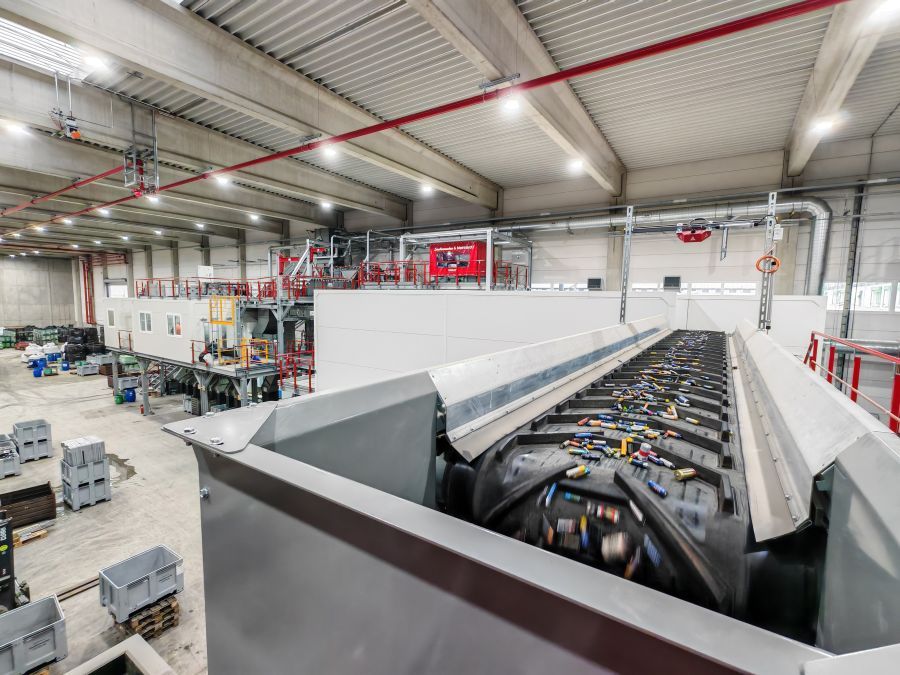
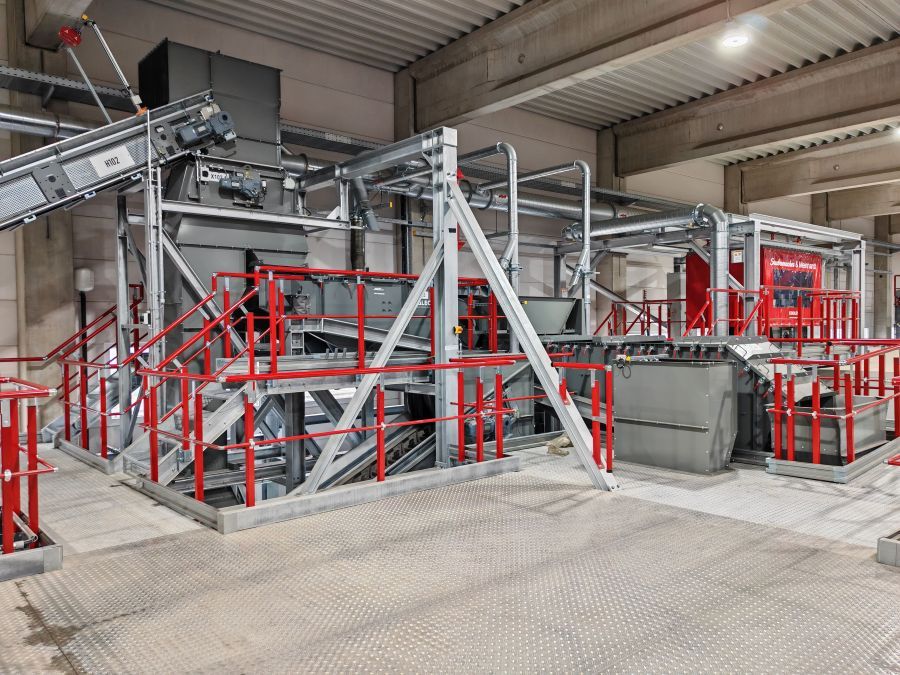
Following the official inauguration of the new facility on 21 April, STADLER Anlagenbau GmbH has delivered one of Europe’s most advanced household battery sorting facilities for Saubermacher and Meinhardt Städtereinigung GmbH & Co. KG in Ginsheim-Gustavsburg, near Mainz, Germany.
The project brought together STADLER, weeeSwiss Technology AG, a STADLER Group subsidiary specialising in WEEE recycling technologies and process development, and METZEN Industries GmbH, responsible for the recycling section, control system and CE conformity. This combination of expertise enabled the development of an integrated, near-turnkey solution for Saubermacher, a key player in the European battery recycling sector, at a level no other supplier was able to offer.
A pre-existing cooperation between weeeSwiss and METZEN played an important role in shaping the overall system concept and ensuring smooth integration across all process stages. From the early design phase through to installation and commissioning, the teams worked closely to address challenges in a structured and efficient way. “The communication was always professional, open and efficient, which made it possible to address challenges quickly and effectively,” states Andrea Zirkl, Process Engineer and Project Manager at Saubermacher.
The facility marks a significant milestone for STADLER, weeeSwiss and the battery recycling sector, as STADLER’s first dedicated battery sorting line, while also setting a new benchmark for reliable, high-quality processing of complex household battery streams at industrial scale. With a processing capacity of up to 100 tonnes of household batteries per day, it also positions itself as a key reference for large-scale battery sorting in Europe.
As Jochen Apfel, CEO of weeeSwiss Technology AG, explains: “This project represents an important step for STADLER in entering the battery recycling sector. It demonstrates how combining process expertise with mechanical engineering can deliver integrated solutions for highly demanding applications.”
Growing regulatory requirements and market dynamics are reshaping the battery recycling landscape in Europe. The EU Battery Regulation sets ambitious targets, including collection rates of 63% by 2027 and 73% by 2030 for portable batteries, as well as high material recovery targets for critical raw materials such as lithium, cobalt and nickel. As battery volumes continue to increase and material compositions become more complex, this is creating a clear need for industrial-scale, highly controlled sorting solutions.
In response to this evolving context, Saubermacher invested in a dedicated household battery sorting facility designed to increase throughput to up to 5 tonnes per hour while significantly reducing manual sorting. As Andrea Zirkl, explains: “We see a clear need for solutions that can handle heterogeneous input streams while ensuring safety and material quality. This facility is a key step in preparing for future market growth and regulatory developments.”
By bridging the gap between collection systems and downstream recycling, it is designed to deliver reliable, scalable pre-treatment and support the efficient recovery of valuable materials.
Engineering a safe and scalable solution for complex battery streams
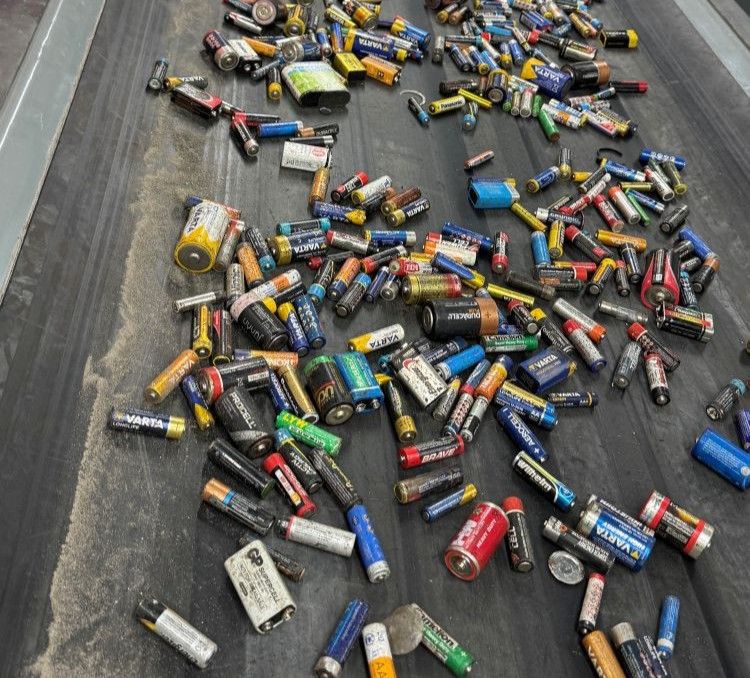
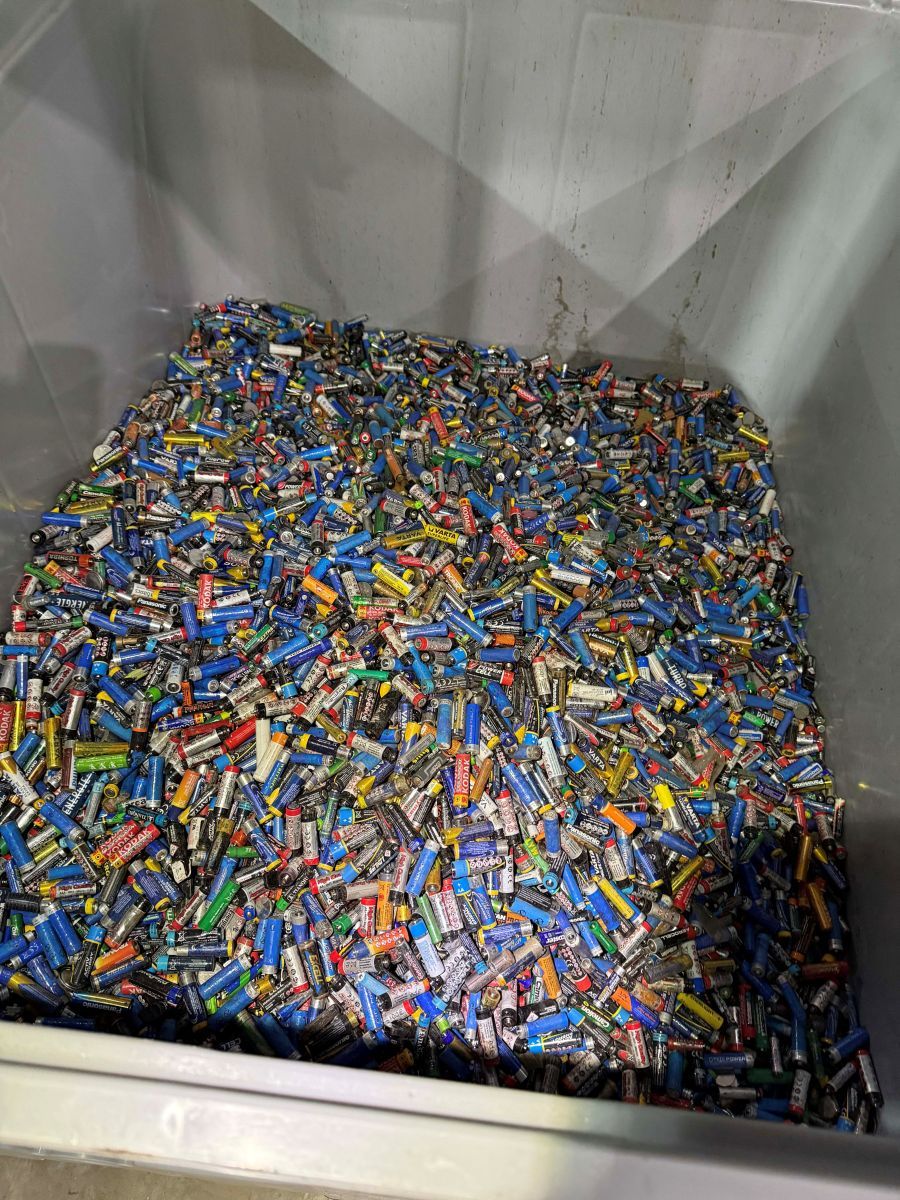
Designing a facility capable of handling the full spectrum of household batteries presented a significant technical challenge. The input stream ranges from very small button cells to larger batteries from devices such as cordless tools or e-bikes, each with different shapes, chemistries and safety requirements. Ensuring safe handling throughout the process was therefore a central consideration.
The plant was designed to operate within a compact building footprint, requiring a fully enclosed system with controlled material flow and sealed transport to minimise risks such as fire or chemical exposure. Particular attention was given to the design of the feeding and conveying systems, ensuring gentle handling of batteries throughout the process to prevent damage or potential safety risks. The recycling section itself was designed as a fully sealed environment, incorporating stainless-steel construction to meet strict safety and containment requirements.
The primary material stream of the sorting plant consists of AlMn (alkaline-manganese) and ZnC (zinc-carbon) batteries, which are conveyed directly to METZEN’s downstream recycling facility. NiMH batteries are separated and directed to a dedicated processing line, while lithium-based batteries and other special types are fully removed and pre-sorted for external processing.
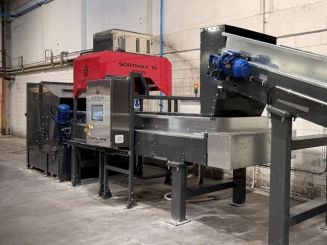
To address these challenges, STADLER developed a tailored system concept that combines robust mechanical design with advanced sorting technologies. The facility processes mixed battery waste, separating it fully automatically into clearly defined fractions, including AA and AAA batteries, button cells, C, D and block batteries, lithium-based batteries, NiCd and NiMH fractions, as well as battery packs and secondary materials such as vermiculite. A combination of bunkers, vibrating chutes, screening, magnetic separation and X-ray sorting systems enables precise classification of battery type and chemistry. The plant also integrates three sensor-based sorting systems that enable classification by battery chemistry – a first-of-its-kind approach at industrial scale.
This configuration enables the generation of consistent, well-defined output streams, including valuable materials such as nickel, manganese, copper, zinc and aluminium, suitable for downstream recycling processes, while maintaining strict safety standards across the entire operation.
A solution-oriented partnership from concept to commissioning
Saubermacher’s decision to partner with STADLER was based not only on technical expertise, but also on the ability to jointly develop a new process for household battery sorting tailored to a completely new application. “We selected STADLER based on their strong track record in complex sorting solutions and their willingness to engage in a solution-oriented partnership,” explains Andrea Zirkl. “What distinguished them was their ability to translate our requirements into a workable concept for battery sorting, while responding to highly specific and technically demanding project requirements.”
As a first project together, the collaboration required a high level of alignment and trust between all parties involved, with a clear focus on reducing manual sorting and increasing operational efficiency.
This collaborative approach was instrumental in successfully delivering a first-of-its-kind facility within the expected timeframe and marks an important step for STADLER in expanding its capabilities in the battery recycling sector.
Advancing circular economy goals through industrial-scale battery sorting
At a broader level, the facility plays a key role in supporting circular economy objectives and strengthening Europe’s battery recycling infrastructure. By enabling the precise separation of battery types and chemistries, the plant contributes to the generation of consistent, well-defined output streams and improves the quality of input material for downstream recycling processes.
The new facility processes batteries and achieves efficient recovery of valuable materials such as nickel, manganese, copper, zinc and aluminium, helping to reduce dependence on primary raw materials and supporting more sustainable resource use. At the same time, the plant ensures that battery waste is handled in a controlled, safe and compliant manner, a critical requirement in a context of increasing regulatory and environmental demands.
From Saubermacher’s perspective, the plant represents an important step towards advancing large-scale battery sorting and establishing robust, industrial-scale pre-treatment processes for increasingly heterogeneous material streams. Its integrated design, combining multiple process stages with a strong emphasis on safety and controlled material handling, positions it as a forward-looking solution in a rapidly evolving market.
“Projects like this show how advanced sorting solutions are becoming a key enabler of the circular economy. By combining technology, process expertise and strong partnerships such as our collaboration with METZEN, we are helping our customers prepare for increasingly complex recycling streams in the future,” concludes Jochen Apfel.

FOTOALBUM
NEWS