Car2Car research project demonstrates feasibility of high-quality material loops on an industrial scale
Car2Car rate increases from 6 to 51 percent under expanded processing and sorting conditions. Results provide important data basis for vehicle recycling.
Through the Car2Car research project, the BMW Group and its consortium partners have demonstrated that high-quality material loops are technically feasible in the automotive industry. Under expanded processing and sorting conditions, it was possible to increase the “Car2Car rate” from six to 51 percent. The “Car2Car rate”, as defined by the project, is the percentage of materials from an end-of-life vehicle that can, in principle, be recovered at high enough quality for reuse in new industrial applications. Particularly high recovery potentials were achieved for steel, aluminium and copper, whereas significant technological challenges remain for plastics and glass. At the same time, the project demonstrates which conditions, investments and regulatory frameworks will be necessary to further scale high-quality material loops in the future. The results are based on a research and demonstration approach under optimal processing and sorting conditions.
Sorting and processing unlock high-quality material loops
Various recovery scenarios were explored as part of the research project. The findings show that additional processing and sorting steps can significantly increase the potential of high-quality material loops. The steps include improved pre-sorting, modified shredding processes, classification, sensor-based sorting of material streams and more precise separation of aluminium alloys. Using methods currently standard in the market, the project achieved a “Car2Car rate” of six percent across all five focus material groups during a vehicle recycling trial with minimal compulsory dismantling. With the help of advanced process engineering and optimised processing routes, the rate climbed to 51 percent. Under these conditions, the “Car2Car rate” increased from one to 81 percent for steel, from 23 to 52 percent for aluminium and from 48 to 68 percent for copper.
The findings confirm the considerable potential for high-quality material loops, especially for metals. At the same time, the results clearly demonstrate that this potential cannot be applied equally across all material groups. Specifically, further development is required for plastics and glass. To achieve large-scale industrial implementation, additional investments will be needed in disassembly, sorting and recycling infrastructure, as well as corresponding regulatory frameworks.
Steel shows potential of high-quality material loops
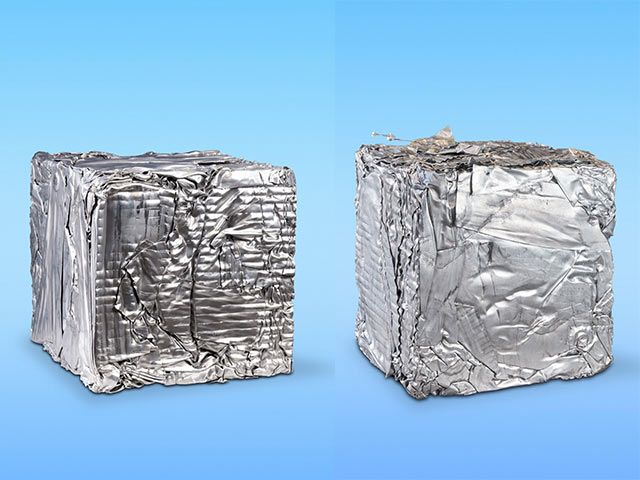
The project’s key findings are illustrated by the example of steel. Up until now, copper-bearing impurities from cables, connectors and other components have hindered the recycling of end-of-life vehicle scrap into high-quality automotive steels. The Car2Car project has now demonstrated that an additional processing step can substantially improve scrap quality. Copper contamination was reduced in a targeted manner by sorting the steel scrap. This ensures high-quality steel scrap as the starting material for new flat steel that meets the requirements of modern automotive applications. A patent application has been filed for this process.
The so-called steel coils produced using this method were integrated into industrial production following successful material and quality testing. In a field test conducted at BMW Group Plant Leipzig, more than 100,000 series parts were produced for use in vehicles. The project thus demonstrates, along a real industrial value chain, that new vehicle components can be manufactured from end-of-life vehicles. However, for large-scale industrial implementation, scalable process chains, additional infrastructure and viable business models are still needed.
Huge potential for metals, further development needed for plastics and glass
At the same time, the project highlighted that progress towards a circular economy varies, depending on the material and the technology available. While recycling processes are already in place for metals such as steel, aluminium and copper, there is still a lack of solutions for plastics and glass that meet the automotive industry's high quality standards.
The wide variety of materials, complex composite material structures and stringent quality requirements make it difficult to produce high-quality recyclates for high-end automotive applications. For plastics, in particular, it has become evident that precisely tailored process chains comprising various sorting and processing technologies will be needed in the future to consistently achieve the material quality necessary for automotive material loops.
Insights for next-generation circular vehicle concepts
The findings from Car2Car will feed into further development of the BMW Group's circular economy, confirming its established Design for Circularity approaches. They will also help design vehicles even more systematically for high-quality material loops. Cooperation with end-of-life vehicle recycling partners, such as PreZero, can also benefit from the experience gained through this project.
Beyond the BMW Group and the participating project partners, the Car2Car findings also provide an important data basis for further development of the entire automotive recycling landscape. In the context of future regulatory requirements, such as the European ELV Regulation, Car2Car illustrates which technological, economic and structural conditions must be created to enable higher material recovery rates and closed material loops. This includes innovation and investment in disassembly, sorting and recycling technologies, increased digitalisation and framework conditions that promote transparency, quality and the return of materials to European material loops.
Car2Car does not focus on what is already standard today but highlights the potential that high-quality material loops could offer in the future. Whether this potential will be realised depends not only on technical feasibility, but also on factors such as access to end-of-life vehicles, favourable market conditions, investment and viable business models throughout the entire recycling value chain.

NEWS