The Plastics Europe Study to Overcome the Plastic Recycling Crisis
Plastic recycling: how to exit the crisis according to a Plastics Europe study Europe risks failing on the circular economy of plastics: the alarm raised by a new study on innovation.
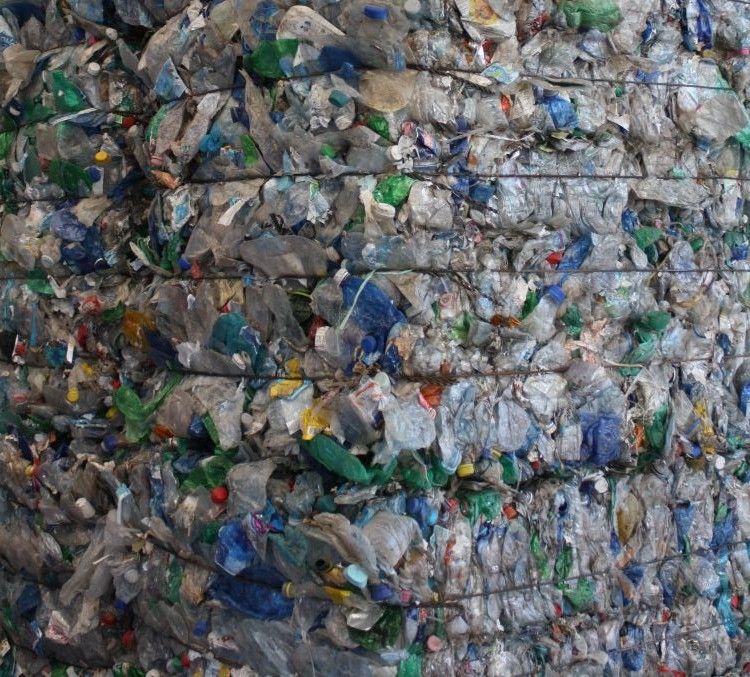
Plastics Europe has carried out a study titled “Europe cannot deliver a circular plastics economy without enabling innovation,” in which it delves into the reasons behind the stalemate and attempts to suggest solutions.
Europe faces a striking contradiction: on one hand, it sets ambitious targets for climate, circular economy, and recycled content; on the other hand, it holds back industrial innovation through a rigid regulatory framework, designed almost exclusively for technologies that already operate on an established scale. This is the indictment launched by the White Paper "Europe cannot deliver a circular plastics economy without enabling innovation" by Plastics Europe, which highlights how the current regulatory system is holding back the investments needed to unlock next-generation recycling.
In Europe, plastic recycling companies are struggling, while they are accelerating in the rest of the world
The data presented in the study paint a worrying picture for the industrial competitiveness of the old continent. The annual growth in recycled plastic production in Europe (including both mechanical and chemical recycling) has literally plummeted, dropping from a solid +12.3% in the four-year period 2018-2022 to a meager +1.9% in the two-year period 2022-2024. In 2024, Europe produced just 8.1 million tonnes of post-consumer recycled plastic, accounting for 14.7% of total European plastic production.
On the contrary, outside the boundaries of the European Union, the numbers are very different: global growth in recycling has accelerated, rising from 4.4% to 7.8% over the same period, reaching 41.5 million tonnes in 2024.
While European mechanical recyclers face plant closures, major chemical recycling projects are constantly being postponed, canceled, or paused due to high costs, weak demand, regulatory uncertainty, and growing competitive pressures from abroad. Confirming this paralysis, the study cites an analysis by the Fraunhofer Institute: out of 65 chemical recycling projects identified in Europe, only 18 are currently operational.
Over two-thirds of waste still ends up in landfills or incinerators
The White Paper emphasizes that mechanical recycling remains the backbone of the system, but it cannot suffice on its own. Indeed, many plastic waste streams are mixed, dirty, or technically too complex to be treated with traditional methods. The result of this technological limitation is dramatic: today, more than two-thirds of the plastic waste collected in Europe is still sent to landfills or incinerators, and only one-third is converted into new raw materials.
To close the loop of the circular economy, it is essential to support mechanical recycling with complementary technological solutions, such as chemical recycling or dissolution, which are capable of treating the most difficult waste to generate high-quality recycled plastic that is also suitable for food contact.
The five regulatory obstacles blocking investments
Why are companies not investing in these technologies in Europe? Plastics Europe identifies five structural barriers created by European bureaucracy:
- Legal recognition arrives too late: Companies must decide today whether to invest capital in commercial plants, but European rules on crucial aspects—such as the recognition of the "mass balance" method to calculate recycled content, the classification of streams, or "end-of-waste" status—arrive only after years of political debates, destroying business certainty.
- Regulating technologies instead of results: Instead of establishing technology-neutral performance requirements and rewarding environmental results (such as CO2 reduction or the increased use of secondary raw materials), European policy tends to rank and compare individual technologies, effectively penalizing emerging ones that must continuously prove their legitimacy.
- Innovation penalized by "proof before scale": Institutions demand that emerging technologies provide definitive proof of energy efficiency and life-cycle impact which, in reality, can only be validated and optimized once the plants have reached an industrial and commercial scale. This creates a vicious circle that blocks projects from the very beginning.
- A fragmented and inconsistent legislation: The sector is simultaneously affected by a myriad of regulations (packaging, end-of-life vehicles, industrial emissions, single-use plastics, food safety) that send conflicting and inconsistent signals regarding permits, traceability, and the shipping of waste within the single market.
- Weak markets and unfair competition from imports: There is a lack of a public support framework for the demand for recycled materials before the legal targets actually come into force. Added to this is the strong pressure from products imported from non-EU countries, which are not subject to the same strict environmental and control standards imposed on European producers.
Europe must not lose its global leadership
Europe stands at a decisive crossroads. To avoid losing not only its industrial recycling capacity but also its global relevance in the development of the circular economy, it must once again make investments on its territory attractive and feasible.
The solution proposed by the study is clear: the European Union must transition to a technology-neutral, results-oriented, and innovation-friendly regulatory approach. This means adopting clear and applicable accounting rules for new technologies (such as mass balance), accelerating permits for new plants, ensuring the smooth functioning of the single market for waste, and, above all, enforcing strict border controls to ensure fair competition with imported products.

NEWS