Innovation and Safety in Lithium Battery Recycling: The New Seval Plant in Colico
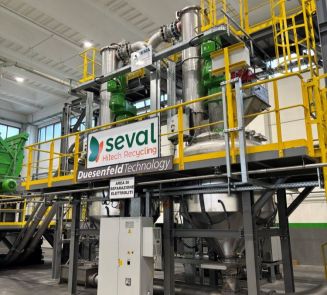
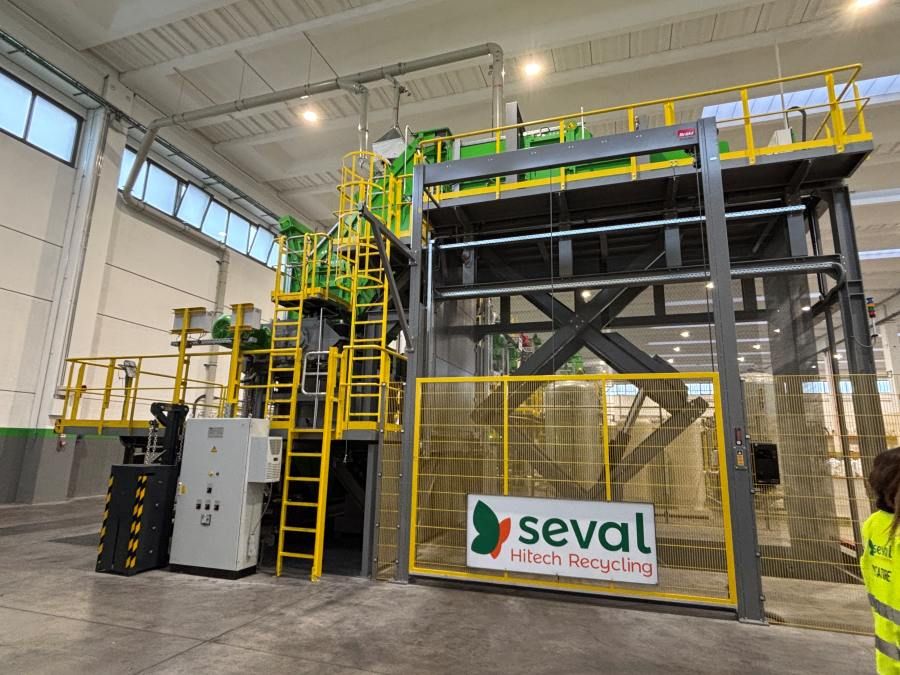
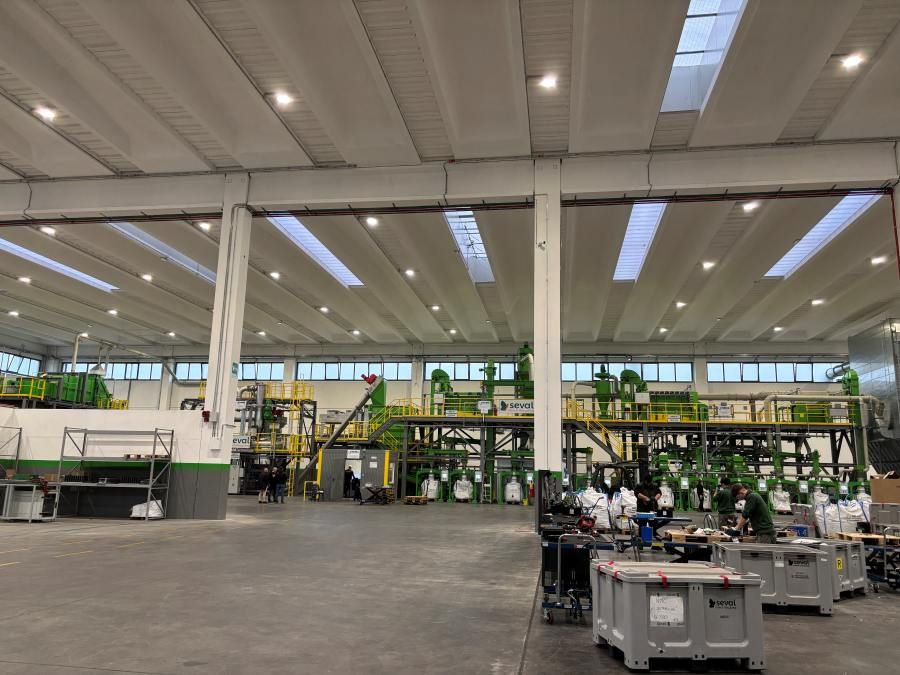
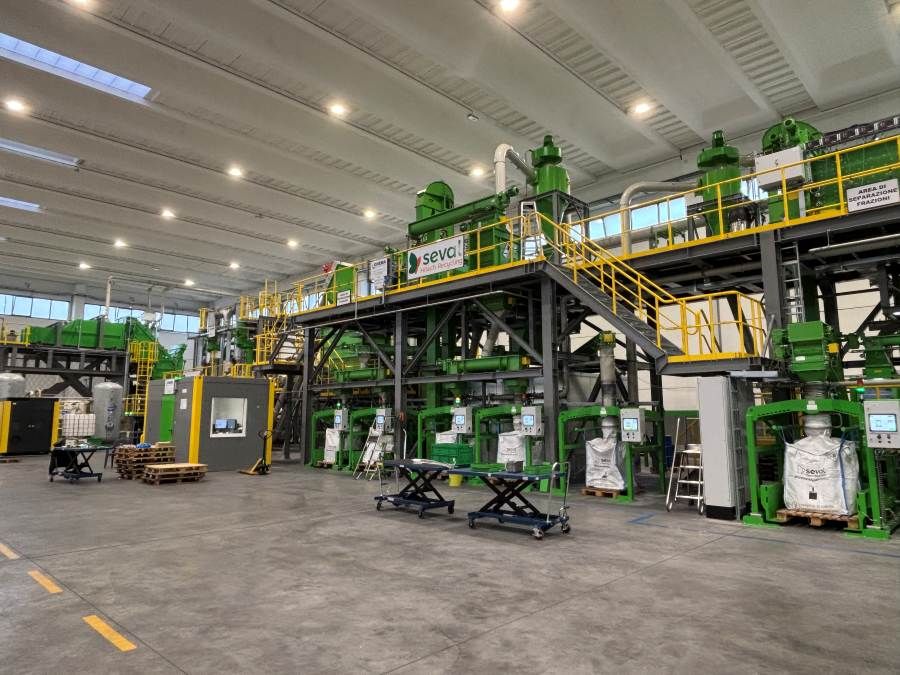
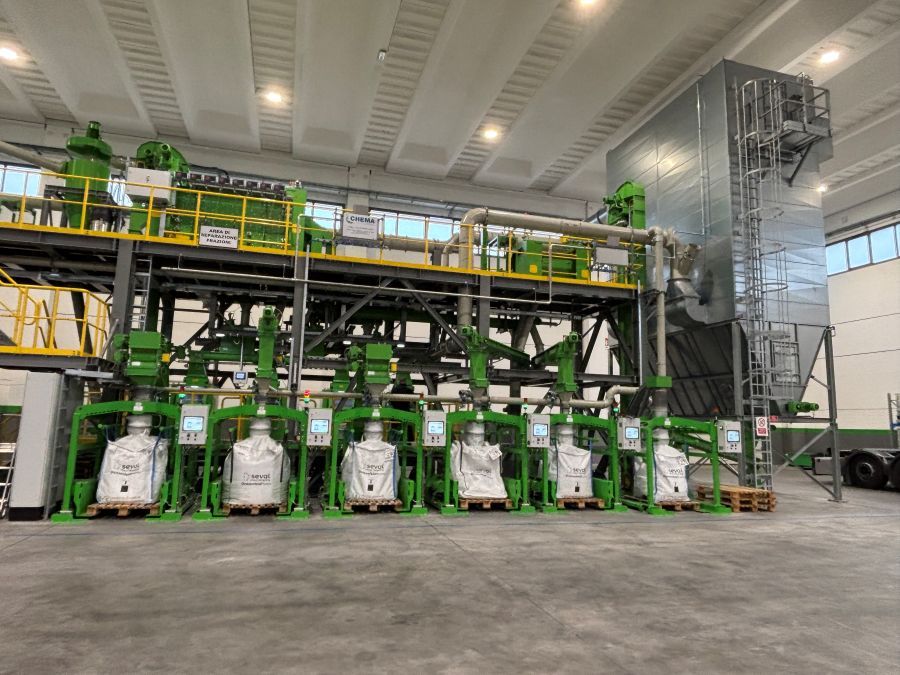
At the invitation of ERP Italia, Recycling Industry visited the new Seval plant in Colico for recycling lithium-ion batteries. A twin plant is also operational in Balvano, in the province of Potenza.
The Seval Group is an Italian company active in the environmental sector that operates 9 plants across the national territory (5 of which are dedicated to WEEE and batteries, and 4 to the valorization of derived fractions), managing just under 200,000 tons of recycled waste per year. The company recently launched an advanced plant in the province of Lodi for treating lithium-ion batteries with a full-capacity design of 15,000 tons per year which, combined with the twin industrial hub in Balvano, covers approximately 20% of Europe's total recycling capacity for this category. For the recovery process of batteries from automotive, industrial, and light mobility sectors, Seval utilizes a patented technology featuring an entirely "cold" processing method that avoids thermal treatments such as melting or roasting and eliminates the formation of hydrofluoric acid at the root.
The Role of the ERP Consortium in the Supply Chain
The European Recycling Platform (ERP) is a non-profit consortium founded in 2002 to manage Extended Producer Responsibility (EPR) based on the "polluter pays" principle. In Italy, it represents approximately 1,300–1,400 member manufacturers, managing 35% of portable batteries placed on the market and around 18% in the small household appliances sector. In addition to ensuring widespread logistics for regional collection, ERP acts as a bridge between the industrial design requirements of manufacturers and the technological needs of recycling plants.
Its Research & Development division participates in several European projects, including the RENOVATE project dedicated to the direct recycling of lithium iron phosphate (LFP) batteries and the development of safety prototypes equipped with predictive sensors capable of detecting the emission of thermal runaway precursor gases during disassembly. The RENOVATE project has already enabled the regeneration of graphite with a laboratory purity of 99.6% and a separation yield exceeding 96%, addressing the reliance on China, where over 90% of global active anode material production is concentrated.
The Seval Plant in Lodi and the Choice of Cold Technology
The facility in Colico, in the province of Lodi, together with its twin plant in Potenza, constitutes the first industrial hub in Italy specifically dedicated to processing industrial and automotive lithium-ion batteries. With an installed capacity of 15,000 tons per year in Lodi and 30,000 tons overall, Seval holds approximately 20% of European recycling capacity in this category.
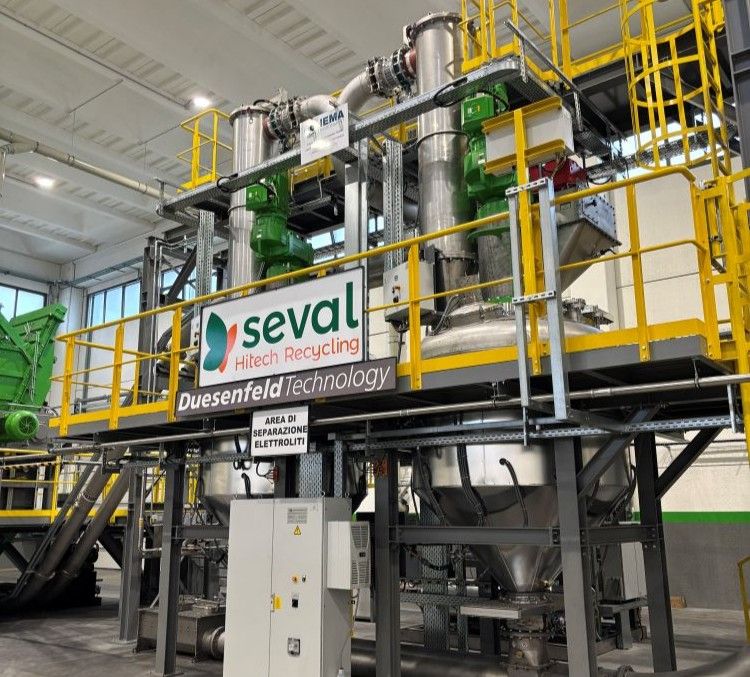
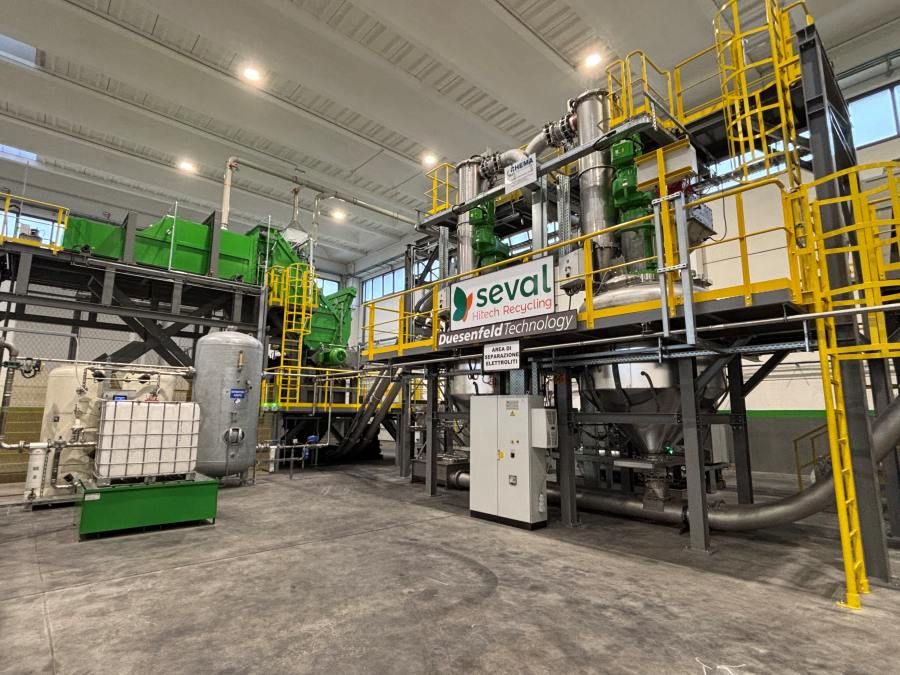
Unlike traditional solutions based on pyrolysis or incineration, the plant adopts a patented process by the German company Duesenfeld operating entirely cold. As engineer Alessandro Danesi from Seval explains: "Unlike other plants, our process does not involve heat: it is a cold plant—there is no fire, no melting, and no roasting. Heating the material produces hydrofluoric acid, which is a highly aggressive acid generating pollutants that are difficult to manage". The process guarantees recovery rates exceeding the EU target of 65% by weight scheduled for the end of 2025, in line with European targets for 2027 requiring the recovery of 50% of lithium and 90% of cobalt, copper, and nickel.
Operating Cycle and Safety Management
Lithium-ion batteries contain recoverable raw materials such as lithium, nickel, cobalt, manganese, copper, aluminum, and graphite, depending on the chemistry.
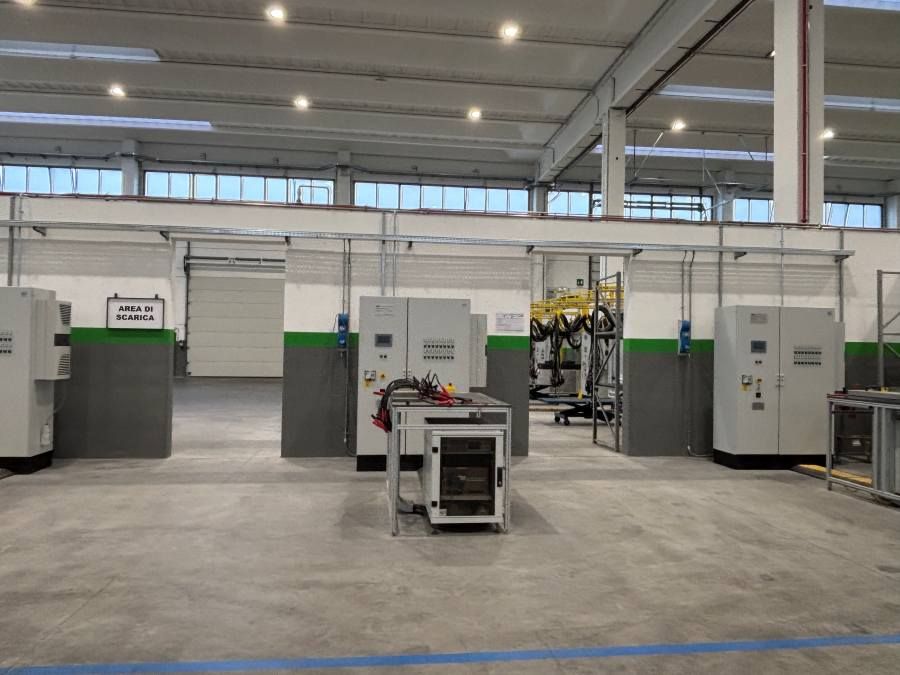
The process begins with maximum storage safety: incoming batteries are placed outside in airtight containers that automatically flood in the event of a fire breakout. Subsequently, the battery packs undergo a deep discharge bypassing the onboard electronic management circuit. Utilizing a patented system of relays in series, the voltage is kept high to accelerate discharge down to 0 V, automatically excluding cells that drop below safety thresholds to prevent overheating.
Once discharge is complete, the batteries are kept in a short circuit for an entire night to neutralize any residual chemical energy, while recovering extracted electrical energy and feeding it back into the plant grid to power the shredders. Eliminating electrical charge transforms the battery into an inert material without an ignition source, removing the risk of thermal runaway at the root and avoiding hazardous heat accumulation in the halls.
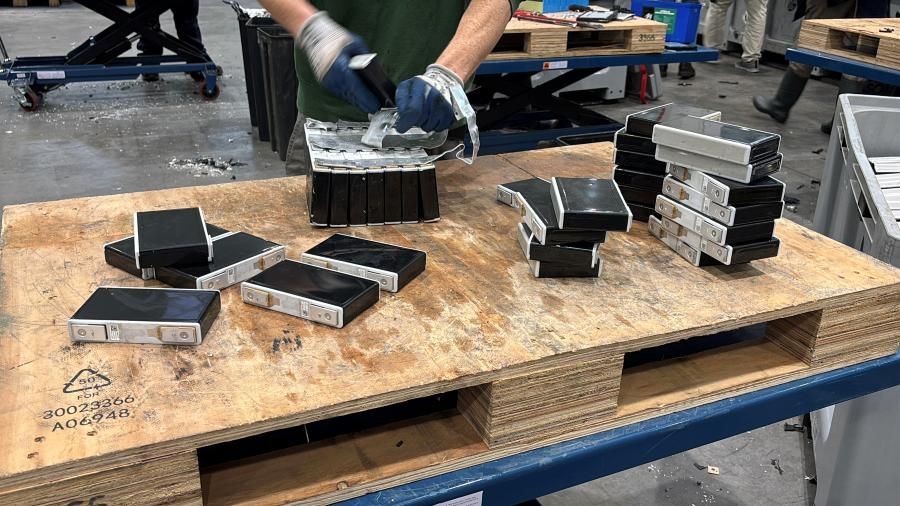
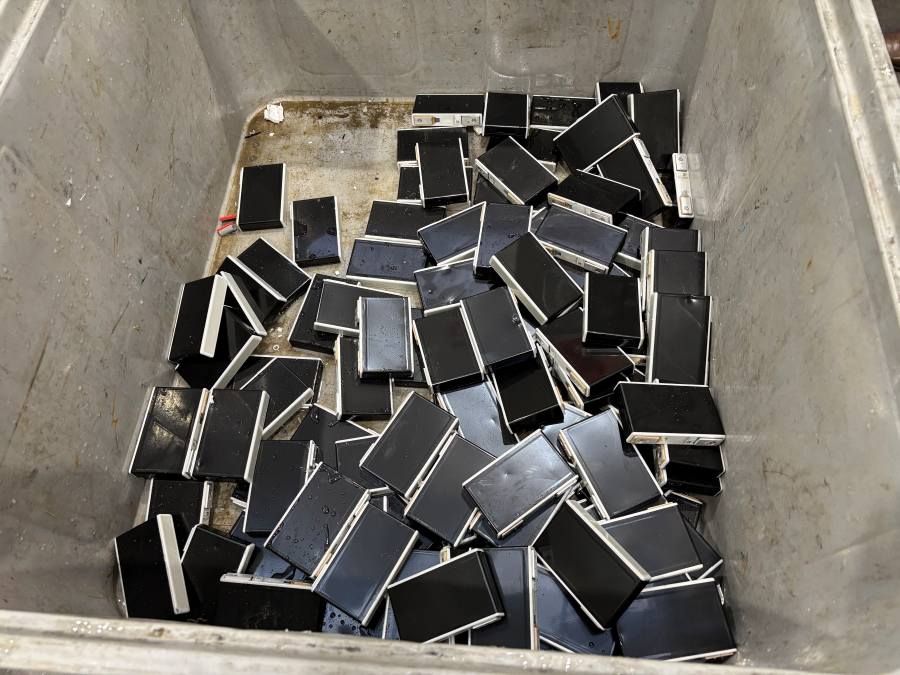
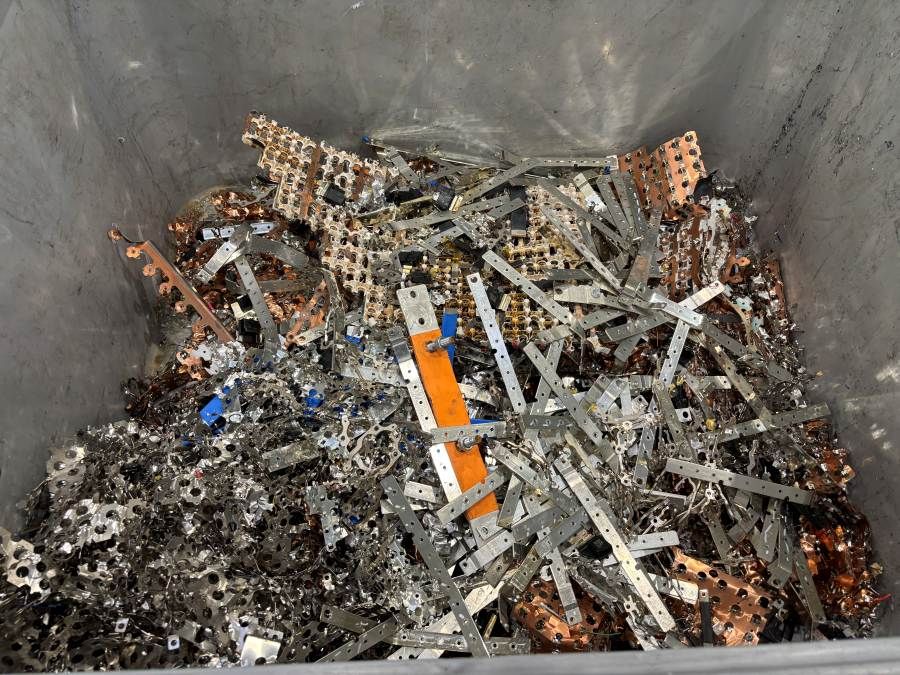
Operators then carry out manual disassembly of external metal structures and wiring to isolate individual cells. These are introduced into shredders saturated with nitrogen to eliminate oxygen and prevent combustion risks. The shredded material passes into high-vacuum dryers that condense and recover electrolytes in ATEX-certified tanks. Finally, the dry fraction is sieved and separated by densimetric sorting to isolate copper, aluminum, plastics, and black mass—the powder containing oxides of cobalt, nickel, manganese, lithium, and graphite.
Eco-Design Challenges, Constructive Limits, and Asian Market Gap
This cold-technology approach provides significant energy and environmental advantages: unlike thermal processes requiring high fuel consumption and complex gas-scrubbing systems producing liquid effluents, cold technology uses simple active carbon filters to intercept volatile substances and allows recovering around 30% of energy directly from battery discharge.
A major obstacle for recycling plants concerns the lack of construction standardization and the architecture of new-generation battery packs. Engineer Danesi highlights how the automotive industry tends to prioritize performance over end-of-life recyclability: "The latest battery to arrive, a sixth-generation BMW, is built with non-modular cells foamed with ultra-high-density polyurethane inside a welded iron casing. Unfortunately, technology advances looking at performance rather than recycling: disassembling it manually is almost impossible, and we are testing water-jet cutting".
In this perspective, adopting the Digital Battery Passport (DPP) will enable plants to know the chemical composition and internal structure of components in advance, allowing the scheduling of homogeneous workflows with high recovery yields.
Regarding industrial competitiveness, bureaucracy, and end-of-life economics, there is a clear divide between Europe and the Asian market. While Europe has a real treatment capacity of around 100,000 tons per year but suffers from an almost total absence of black mass refining plants, China boasts significantly higher treatment and refining capacity. According to Danesi, the fundamental difference lies in the regulatory approach: "The difference is that we regulate before having the industry, whereas they develop the industry and regulate afterwards".
Any European decision to block black mass exports before building an internal refining supply chain would risk paralyzing the sector or driving its management through illegal channels. Compounding this are bureaucratic rigidity and slow cross-border authorizations, which require up to a year of administrative procedures to obtain annual permits needed to transfer materials to other European plants.

FOTOALBUM
NEWS