With STADLERconnect, data becomes performance for optimised plants
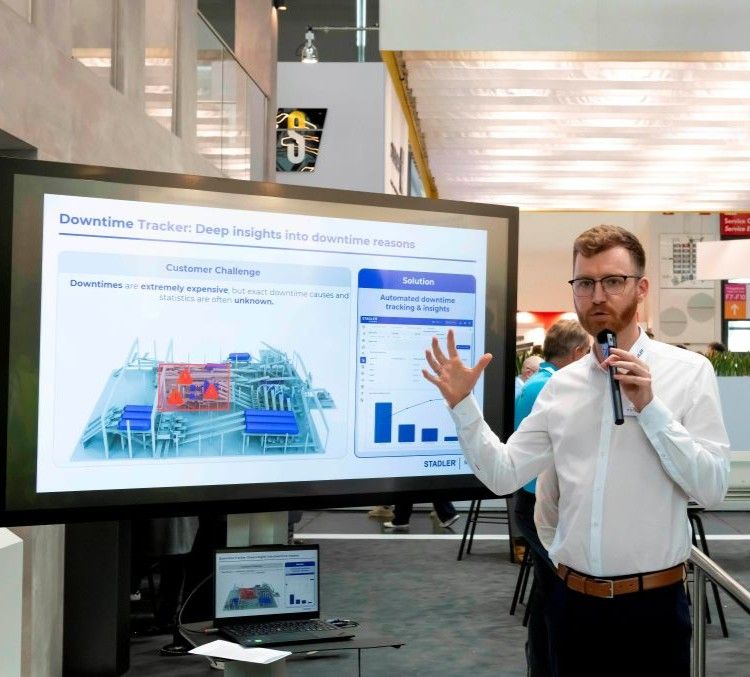
During IFAT 2026, Recycling Industry had the pleasure of attending a live demonstration of STADLER's new integrated digital solutions, designed to boost performance, availability and efficiency of waste recycling plants.
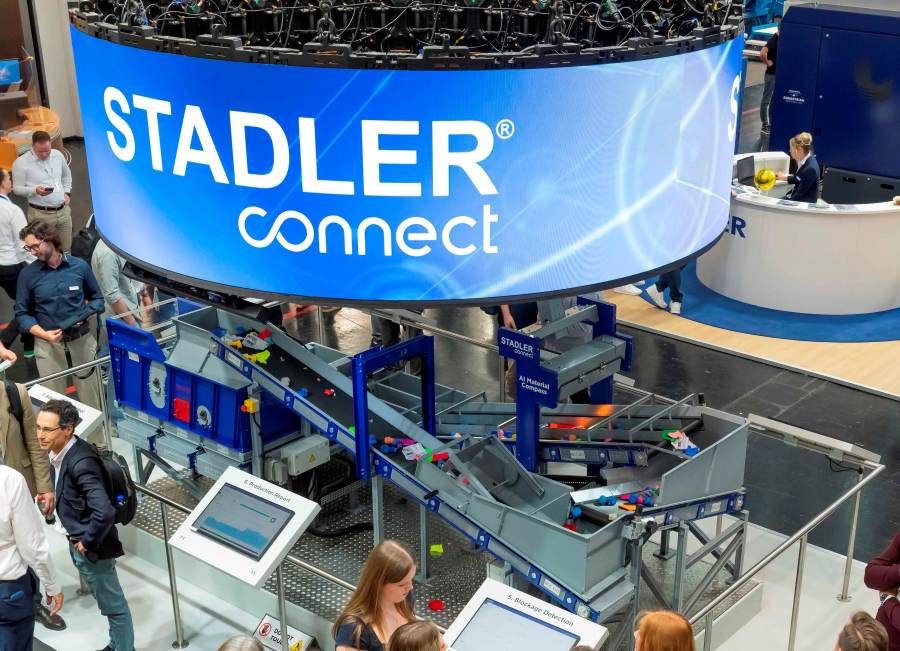
Waste recycling plants are becoming increasingly high-performing, as they will be able to benefit from innovative technologies driven in real time by artificial intelligence, which optimises material flows to prevent plant downtime and much more. At the STADLER stand at IFAT, an integrated Demo Loop with STADLERconnect was on display to show visitors how data can generate measurable improvements in plant performance and efficiency.
To gain a better understanding of how the platform works, Recycling Industry sat down with one of its designers, Dr. Nils Kroell, Head of Digital Solutions at STADLER Group, for an interview.
How does STADLERconnect transform material flow data into detailed production reports, and how do these insights help plant operators make day-to-day operational decisions?
STADLERconnect brings together data from different sources in the plant, such as belt scales, bunker weighing systems, and bale press signals for material quantities, our in-house developed volume flow sensors for real-time mass flows, and our AI Material Compass for material qualities, and consolidates them into a consistent mass balance. Instead of pulling numbers from separate systems, operators see input, intermediate, and output flows in one unified view.
This supports day-to-day decisions in two main ways. On the input side, the platform helps operators keep feeding stable and throughput close to target. On the output side, production data broken down by shift and fraction makes it easier to compare input batches, track sorting performance over time, and identify the root causes when KPIs drift.
What is the actual operational or recovery performance benefit of integrating a platform such as STADLERconnect into a waste treatment plant?
Results depend on each plant's setup, but across our installed base we consistently see gains in both availability and sorting performance.
On availability, our Blockage Detection module helped a U.S. material recovery facility gain more than 100 additional uptime hours per year by letting operators react before blockages escalated into line stops. Predictive Maintenance contributes similarly, turning multi-hour emergency repairs into planned interventions on critical assets such as ballistic separators, trommel screens, and conveying technology.
On sorting performance, Adaptive Screen Cut Control delivered yield improvements of up to 18% at a European sorting plant through better line balancing. Combined with continuous quality monitoring via the AI Material Compass, customers achieve more stable shift-to-shift performance and better bale quality.
Data is central in waste treatment plants, but many companies are still cautious about AI because they fear digitalisation could expose sensitive company data. How does STADLER guarantee data privacy and protection for its customers with STADLERconnect?
Security is built into STADLERconnect from the ground up. It starts with secure data acquisition through our dedicated edge infrastructure and continues to our cloud platform, where each customer operates in an isolated tenant with role-based access and multifactor authentication.
Dedicated DevOps and security specialists in our team continuously monitor the platform and harden it against evolving threats, supported by external cybersecurity partners who regularly review our architecture and processes. Customers should benefit from AI and digitalisation without worrying about security.
As an OEM plant manufacturer, how does STADLER's position, together with the integration of purpose-designed hardware such as the AI Material Compass, ensure higher data quality and more accurate predictive capabilities compared to platforms developed by software-only providers?
Being the plant builder ourselves shapes three things that directly raise data quality and prediction accuracy.
First, decades of plant engineering expertise are built into every module: where we measure, which patterns matter, and how results translate into operational actions, delivering real insight rather than only data visualization or generic anomaly detection.
Second, we maximize the value of existing data streams with our STADLER know-how in plant design and commissioning. Our automation team configures the PLC specifically for STADLERconnect, commissioning team validates data on site, and dedicated pipelines contextualize signals before they reach our AI models.
Third, we develop and deploy purpose-built hardware where it matters. The AI Material Compass combines hyperspectral near-infrared and high-resolution RGB sensors with AI models trained on extensive plant data, reliably classifying even similar-looking materials. The same principle applies to our sensors for Predictive Maintenance and Adaptive Plant Control.
Together, plant builder expertise, optimized automation, and purpose-built hardware give STADLERconnect its level of data quality and prediction accuracy.

FOTOALBUM
NEWS