The Prato Textile Hub: Italy’s First Industrial Plant for Automated Textile Recycling
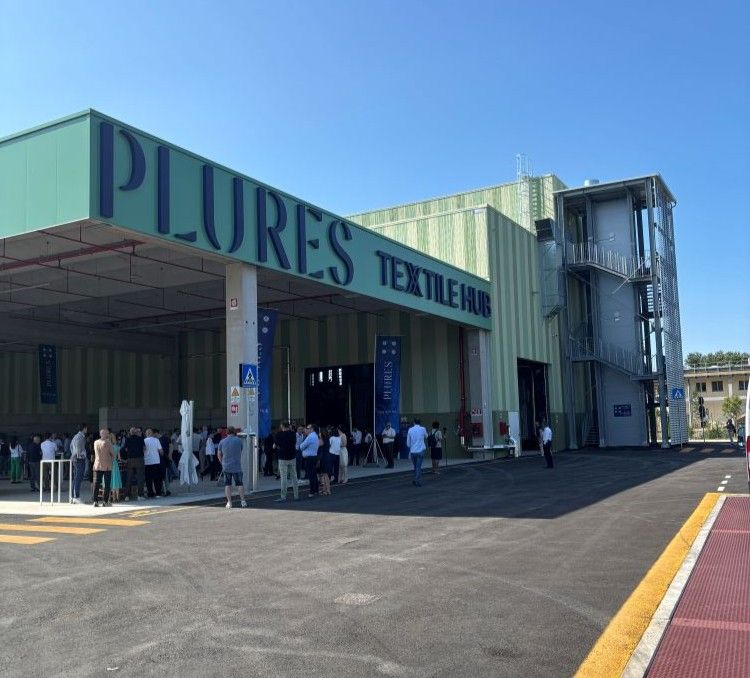
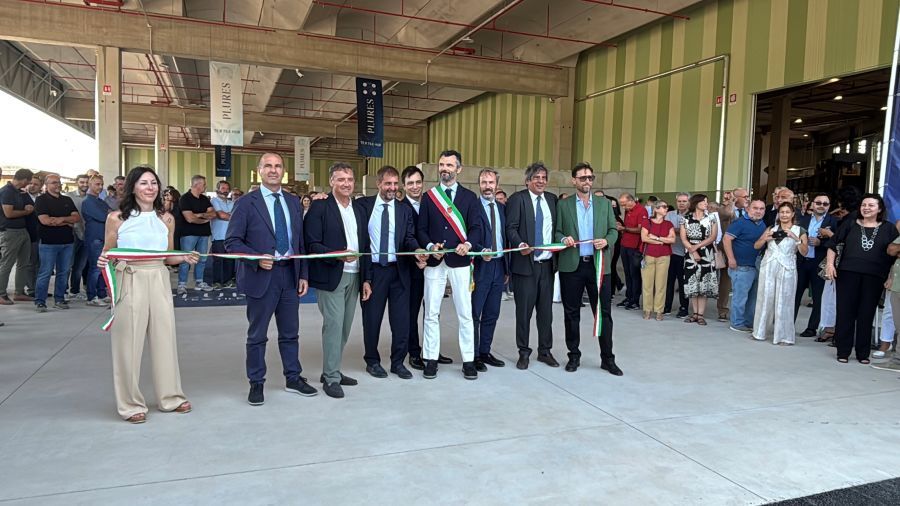
The Prato textile district strengthens its European leadership in fiber regeneration with the inauguration of the Plures Textile Hub, a €31.3 million infrastructure dedicated to textile waste recovery. The project, supported by €900,000 in PNRR funds and Industria 4.0 incentives, represents the first industrial-scale application in Italy of Valvan’s Fibersort technology.
The goal is to recover the highest possible value from fibers. Garments that are still suitable will be sent for reuse, while those no longer reusables will be sorted and directed to recycling, reintroducing new material into the production cycle as “end of waste.” At full capacity, approximately 60% of post-consumer materials can be destined for reuse after necessary sanitization; the remaining 40% will undergo fiber sorting and pre-shredding, the first step in the subsequent mechanical recycling process.
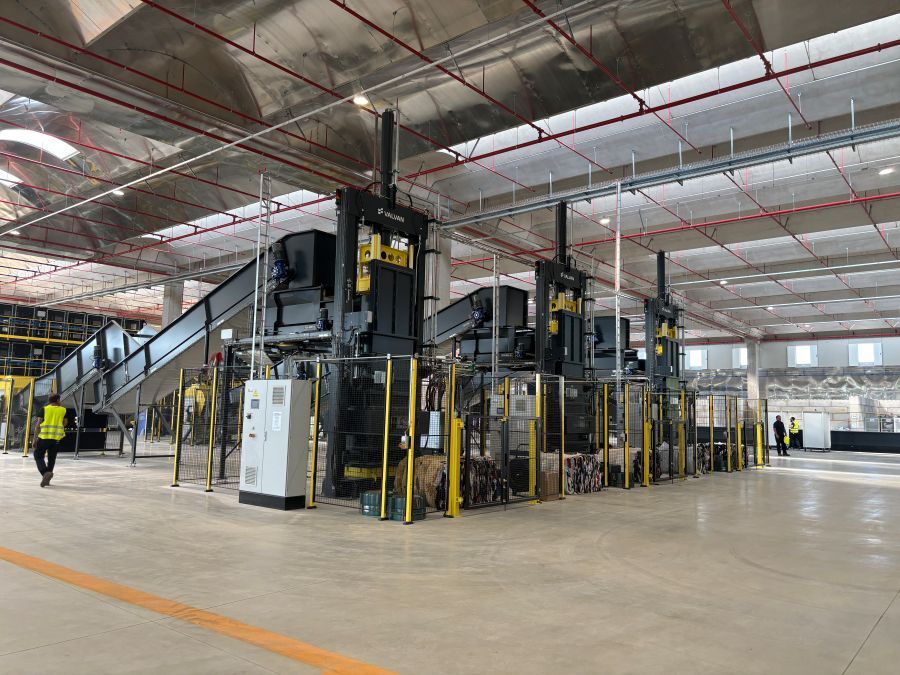
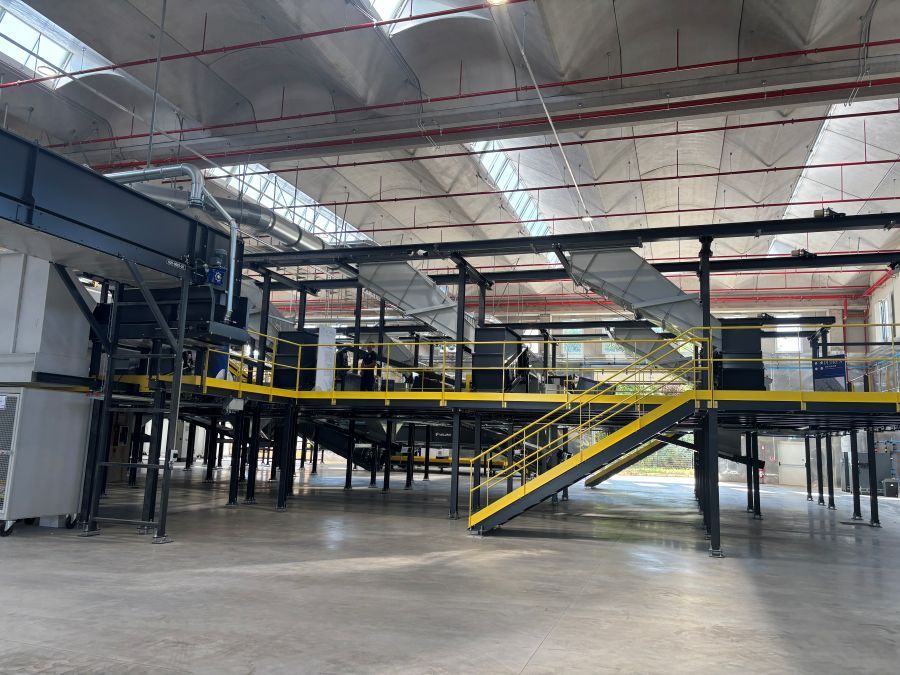
The plant covers 7,000 square meters of indoor space, plus approximately 10,000 square meters of external areas dedicated to logistics and material handling. Construction took 24 months, while full system testing will continue until the end of 2026, leading to complete operational ramp-up.
The facility meets the European obligation for separate collection of textiles (effective from 2025) and the EPR (Extended Producer Responsibility) regulation, which requires companies to manage the end-of-life of their products. The Hub can process up to 33,000 tonnes per year:
- 20,000 tonnes of post-consumer material: from urban separate waste collection.
- 13,000 tonnes of pre-consumer material: industrial scraps and unsold garments from the district.
The plant guarantees an operating capacity of up to 4 tonnes per hour and employs around 50 workers on two shifts.
Technical Description of the Production Process
The treatment cycle is divided into two lines: a semi-automatic line for post-consumer material and a fully automatic line for pre-consumer material.
1. Reception, Pre-Sorting and Sanitization
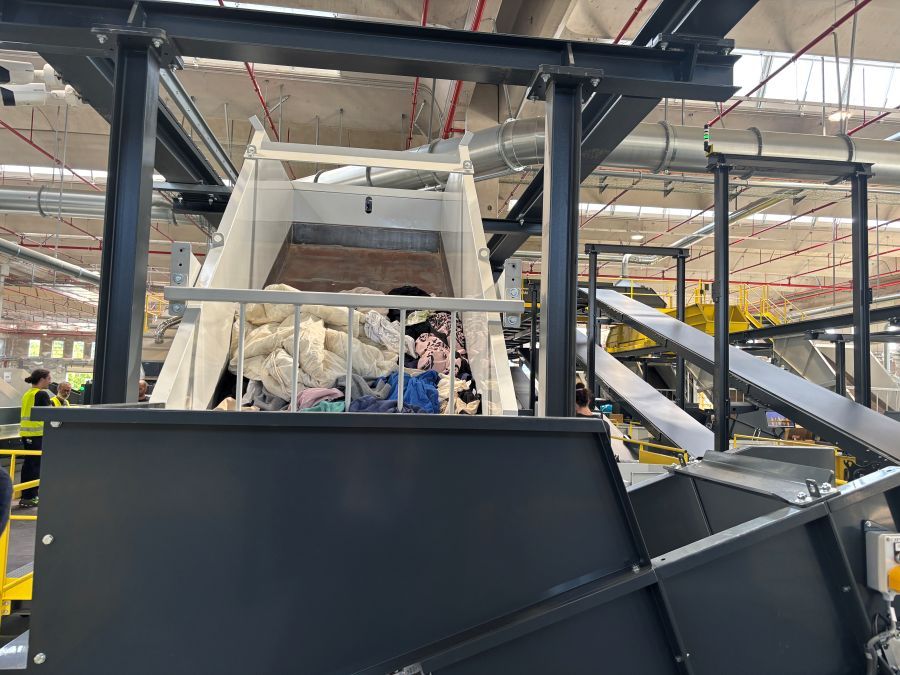
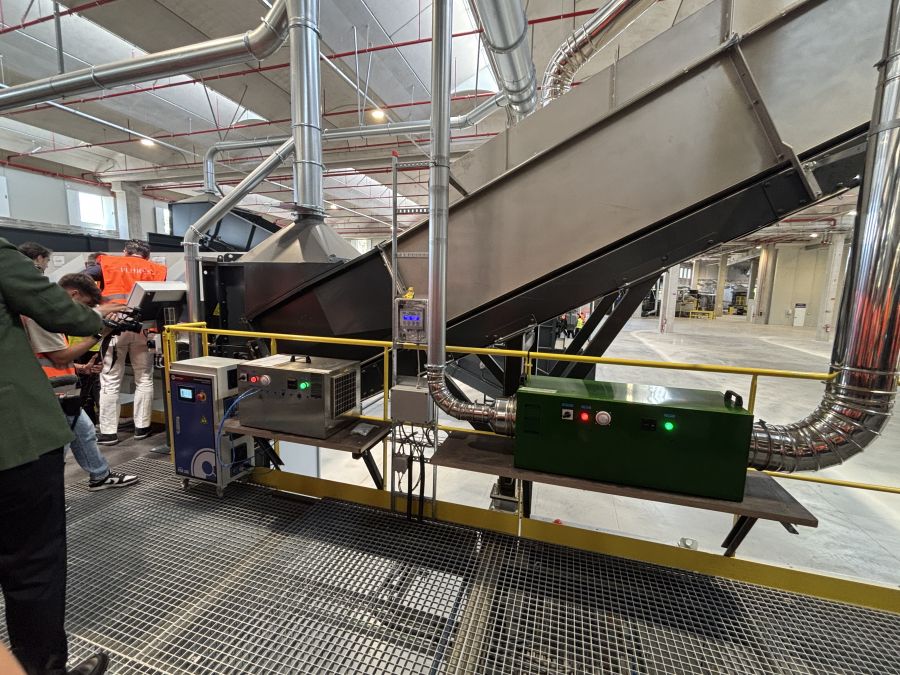
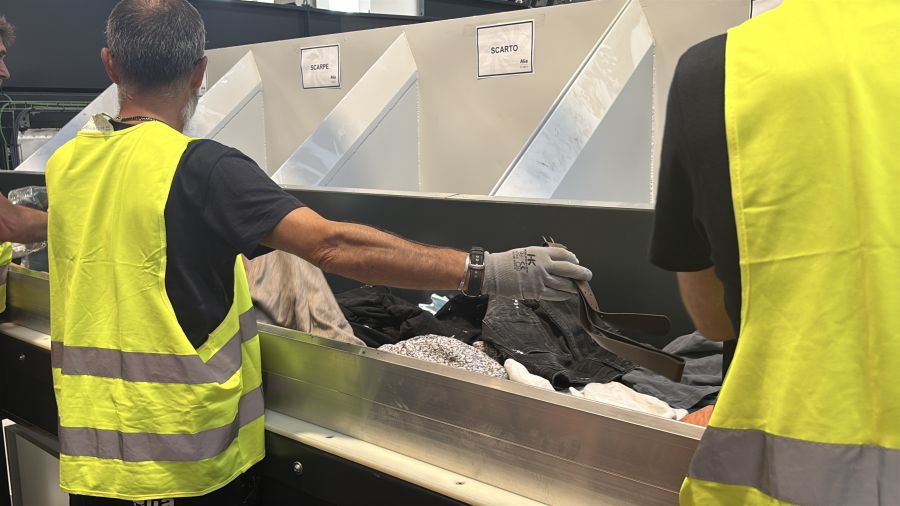
Everything starts at the entrance weighbridge, where waste is quantified on the incoming vehicles. The material is unloaded onto robotized conveyor belts leading to manual pre-sorting, divided into two sections. Here, operators remove non-compliant materials (plastic, shoes, bags, metals). This is followed by the mandatory sanitization phase, carried out using an oxygen and ozone system.
2. Distribution and AI-Driven Sorting
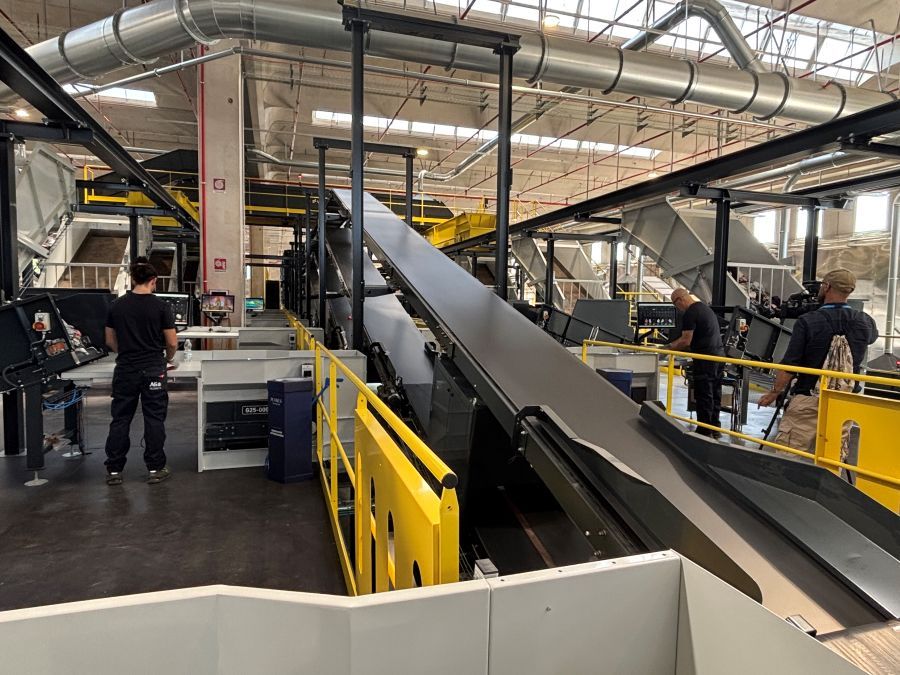
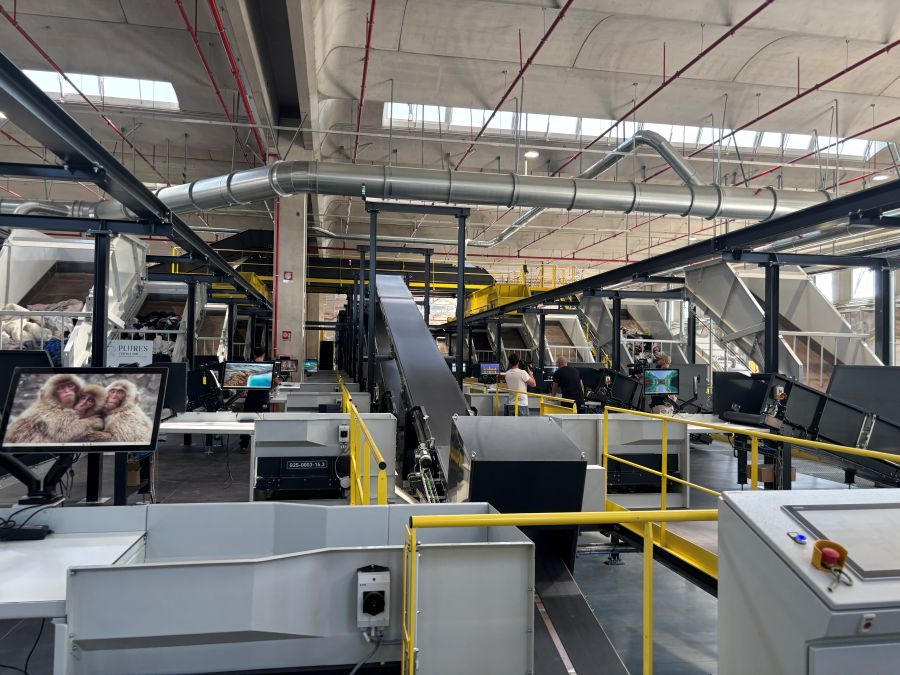
The sanitized material is handled by two robots moving on rails that distribute it to 16 workstations based on hopper fill levels. This is where the core of the innovation takes place:
- Voice Recognition: The operator selects the garment and gives a voice command (“reuse” or “recycle”).
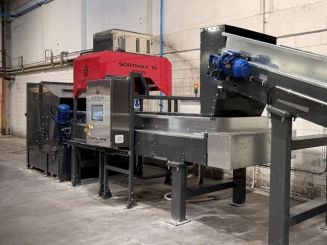
- NIR (Near-Infrared) Technology: Garments pass under optical sensors that instantly identify fiber composition (e.g., cotton, wool, blends) and color.
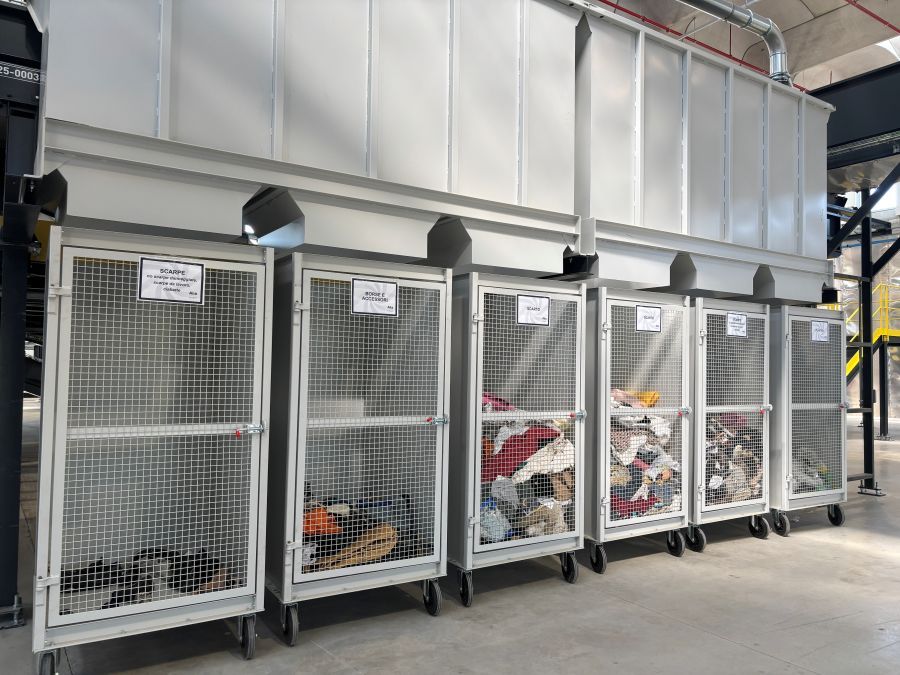
- Pneumatic Sorting: A compressed air jet system diverts the garments into specific bins, allowing up to 99 different combinations of materials and color ranges.
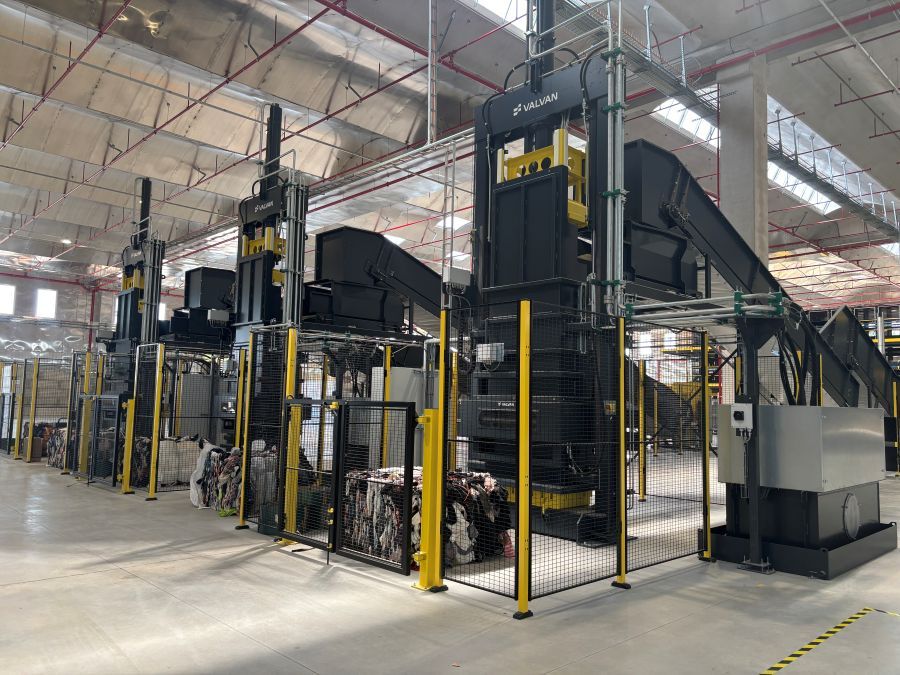
3. Mechanical Shredding Line
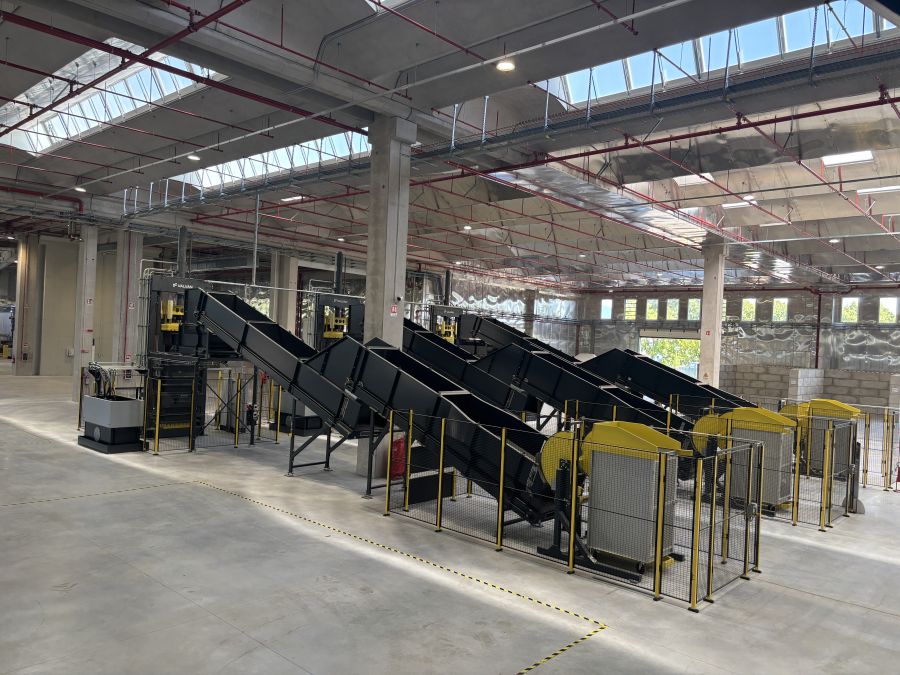
For materials destined for mechanical recycling, the plant has an advanced line that shreds the fabrics and makes them suitable for new spinning, through the following stages:
- Cutting: Two cutters in series reduce the fabric into strips.
- Homogenization: The material passes through a homogenization tank that separates the pieces via a conveyor.
- Fiber Opening: Counter-rotating drums “open” the fabric, transforming it into shredded fiber.
- Decontamination: The machinery automatically ejects foreign bodies such as buttons and zips, ensuring a clean secondary raw material for industry.
Output and Economic Value
The process transforms waste into a resource with End of Waste qualification. Garments suitable for reuse (estimated at 60% of post-consumer material) are compacted into light bales for the market. Recycled material is supplied to companies already sorted and decontaminated, ready for further processing or regeneration.
At full capacity, the Textile Hub will employ approximately 50 workers organized in two shifts. Of these, about two-thirds will be involved in the semi-automatic sorting of materials — a phase that remains crucial today for ensuring the quality and efficiency of the entire recovery process.

FOTOALBUM
NEWS