Italy’s special waste accelerates: production at 172 million tonnes and record recycling in construction
The largest stream concerns construction and demolition waste, which reaches a record recycling rate of 82.4%.
During 2024, the overall production of special waste in Italy registered a sharp acceleration, exceeding the threshold of 172 million tonnes. This increase, equal to +4.6% compared to the previous year (approximately 7.6 million tonnes more), highlights a marked divergence from the general trend of the national economy, which in the same period saw Gross Domestic Product growth flat at 0.8% and final consumption contract by +1.3%. Waste resulting from industrial, commercial, artisanal, and service activities, as well as waste treatment and environmental remediation, delineates a production map closely linked to the key sectors of the country's productive system. These are the data presented by Ispra’s 2025 Special Waste Report, which provides annual information on the production and management of special waste in Italy.
Construction confirms its role as the driving force of national production
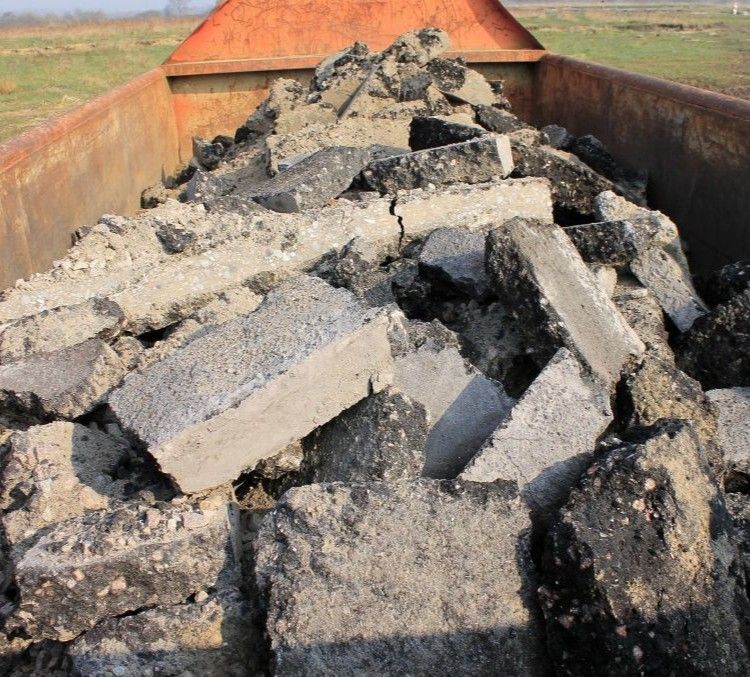
Leading the production of these fractions is, once again, the construction and demolition sector, which confirms itself as the main national driver, generating on its own 90.4 million tonnes, equal to 52.5% of the total volume of special waste. It is followed at a distance by waste treatment and remediation activities, responsible for 23.1% of the total, manufacturing activities with 15.9%, and the remaining economic activities at 8.5%. In terms of hazardousness, almost all of the generated streams are non-hazardous, covering 93.7% of the total and marking an increase of 4.5% over 2023. In contrast, hazardous waste stood at 10.8 million tonnes, although it showed a more lively percentage growth of +6.0% compared to the previous year.
The industrial geography of waste streams
The geographical distribution of production faithfully reflects the concentration of the Italian manufacturing and industrial fabric, focusing largely in the northern regions, which alone drive 56% of the overall figure. In this context, Lombardy confirms itself as the national hub with 36.4 million tonnes (21.2% of the total), followed by Veneto with 18 million, Emilia-Romagna with 15 million, and Piedmont with 13.9 million. The regions of Central Italy generate 31.3 million tonnes, or 18.2% of the total, driven mainly by the production of Tuscany and Lazio, at 11.5 and 11.2 million tonnes respectively. Finally, Southern Italy stands at 44.3 million tonnes (25.8% of the national total), with Campania at the top of the southern area with 11.7 million tonnes, followed by Sicily with 10.1 million and Puglia with 9.3 million.
Waste management: material recovery is the main path
Management data for 2024 show that a total of 187.2 million tonnes of special waste were treated in Italy, of which 94.8% is composed of non-hazardous fractions. The national system demonstrates a progressive ecological transition by reducing the use of landfilling, which registered a decrease of 2% compared to 2023 and 23.9% when compared to 2021 data. Material recovery consolidates itself as the backbone of national management, representing 74.3% of the total managed (equal to 139.1 million tonnes, up +6.4% in one year), compared to disposal, which stands at 13.9%.
This dynamism is also reflected in import and export flows: Italy imports about 7 million tonnes of waste, mostly consisting of scrap metal from Germany and France destined to supply national steel mills, while exporting 5.1 million tonnes, directed mainly towards Germany. To support this massive recovery cycle, the peninsula relies on an infrastructural network of 10,563 active plants, with Lombardy hosting almost one-fifth of this network with 2,068 operational structures.
The President of ISPRA and SNPA, Maria Alessandra Gallone, stressed how, although challenges emerge related to high volumes and the uneven distribution of plants across the territory, the data confirm the solidity of the national path towards a circular economy. Gallone particularly highlighted the excellent performance in the recycling of construction waste, explaining that innovation and efficient management can translate into concrete benefits for the environment and industry, encouraging continuation on the path of recovery and the strengthening of technological skills.
Waste streams
The examination of individual streams highlights some excellences and specific management criticalities. The construction and demolition sector reaches a record recycling rate of 82.4% (calculated net of excavated soil and rocks and dredging sludges), far exceeding the European target of 70%. End-of-life vehicles also show good recycling performance at 86.7%, surpassing the 85% target, although the target of 95% total recovery remains distant due to the lack of plants dedicated to energy recovery. As far as end-of-life tyres (ELTs) are concerned, the tonnes managed were 495 thousand, with 85% successfully sent for material recovery, despite a need for the optimization of collection networks.
On the textile and tannery waste front, more than 551 thousand tonnes were managed, an increase of 5.9% compared to the previous year; the stream is dominated for 72.2% by waste from the tanning sector, while the textile sector accounts for the remaining 27.8%. Sewage sludge, on the other hand, registered a production of 3.1 million tonnes (down 3% compared to 2023), with 53.7% destined for recovery and 44.1% still sent for disposal.
In contrast, strong criticalities remain for other sensitive fractions. The management of asbestos suffers from the lack of systematic decontamination of the national territory, against a production of asbestos-containing waste equal to 272 thousand tonnes, a sharp increase of 13.4% compared to 2023. Finally, medical waste stood at 259 thousand tonnes, mostly consisting of hazardous substances (226 thousand tonnes, +4% on 2023), for which disposal remains the widely prevalent management path, absorbing 73.4% of the overall stream.

NEWS